




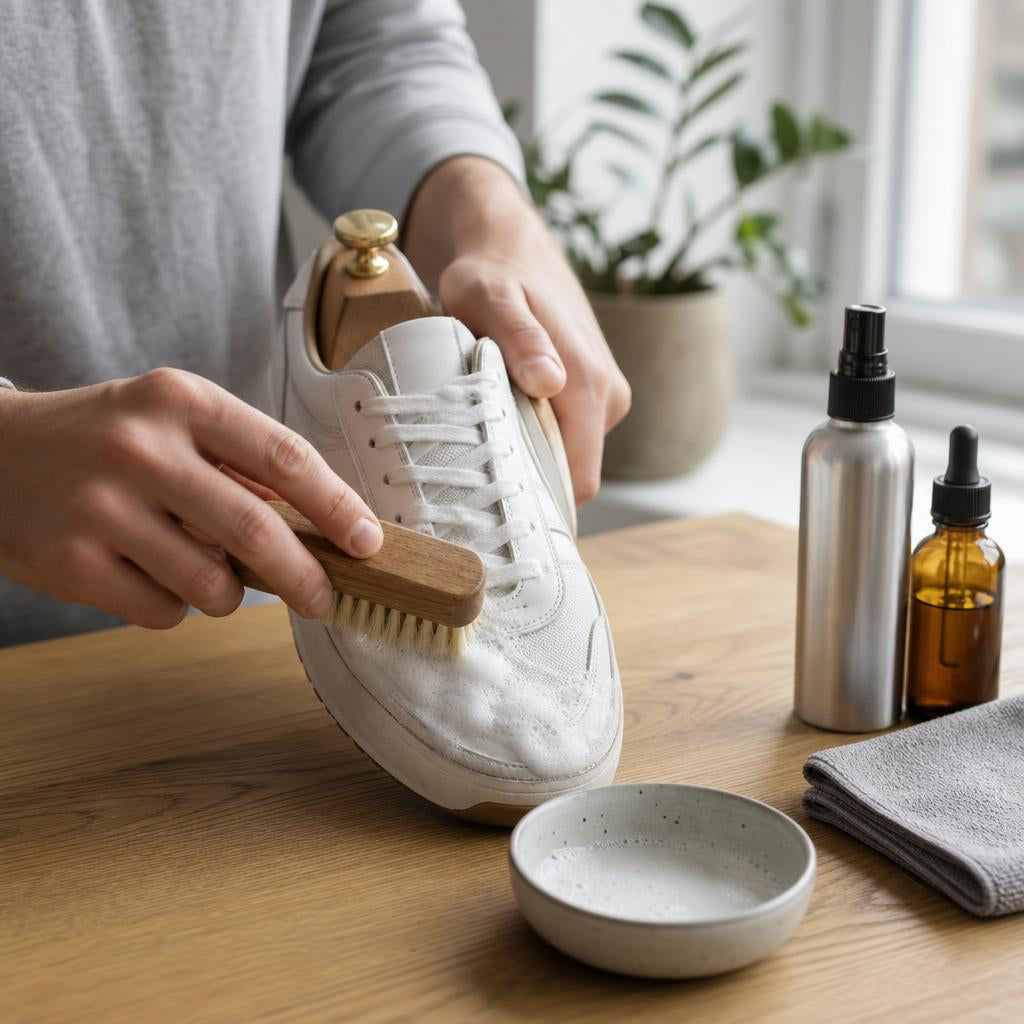
Cleaning sports shoes works best when you do not simply start with water, soap, or the washing machine. The right result depends on the material, the level of dirt, and the drying method. Whether you want to clean white sports shoes, freshen up smelly sports shoes, or clean suede sports shoes without damage, the right approach will make your pair look fresh and presentable again. On this page, you will read step by step how to clean sports shoes, what to avoid, and when professional cleaning is the smartest choice. If you want to go over the basics first, check out Cleaning sneakers: step-by-step guide.
Ontdek de nieuwste sneaker drops
Shop collectie →How to safely clean sports shoes
The basics of cleaning sports shoes are simple: first remove dry dirt, then clean gently, and finally let them dry slowly. In practice, things often go wrong because shoes get too wet, are treated with a brush that is too hard, or dry too quickly near a heat source. That can cause glue bonds to loosen, materials to harden, or colors to change.
That is why you should always work with a soft brush, lukewarm water, and a mild cleaner that is suitable for sneakers. Preferably do not use too much water, especially on suede, nubuck, and mesh. Remove the laces, treat stubborn spots locally, and always test a product on a small hidden area first. That way, you can clean sports shoes without unnecessary risk of damage.
Step-by-step plan for cleaning sports shoes
1. Remove laces and loose dirt
First take the laces out of your shoes. This makes it easier to reach the tongue, eyelets, and edges of the upper. Gently tap out the shoes and brush away sand, dust, and dried mud with a dry soft brush. This prevents you from rubbing dirt deeper into the material once you start working with moisture.
2. Determine what material your sports shoes are made of
Not all sports shoes should be treated in the same way. Leather, suede, nubuck, mesh, and textile all react very differently to moisture and friction. So first take a good look at the upper and treat each material correctly. This is the most important step if you want to clean sports shoes without discoloration or deformation.
3. Clean with a mild product and minimal water
Lightly dampen a cloth or soft brush with lukewarm water and a small amount of mild sneaker cleaner or mild detergent. Clean using small circular motions and work from cleaner areas toward dirtier ones. Do not let the foam or cleaner dry on the shoe; instead, wipe it away in between with a clean damp cloth.
4. Treat sole edges and black marks separately
Sole edges often attract the most dirt. You can use a slightly firmer brush here than on the upper, but still be careful. Black marks on sports shoes can often be removed by working locally with a microfiber cloth and a suitable cleaning product. Do not scrub hard, because that can make smoother materials look dull.
5. Let your shoes dry slowly
Fill the shoes with paper to absorb moisture and support the shape. Place them in a dry spot at room temperature. Avoid direct sunlight, radiators, and the dryer. Heat that is too intense can affect glue and can make white sports shoes turn yellow more quickly.
6. Protect after cleaning
Once your shoes are completely dry, you can treat them with a protective sneaker spray. That helps prevent water and dirt from sticking as quickly. Especially if you often wear your sports shoes outside, this is a smart final step to keep them clean for longer. Read more about waterproofing and protecting sneakers.
Cleaning sports shoes by material
The search intent behind cleaning sports shoes is often practical: people want to quickly know what does and does not work for their type of shoe. That is why material knowledge matters more than household tricks.
Cleaning textile and mesh sports shoes
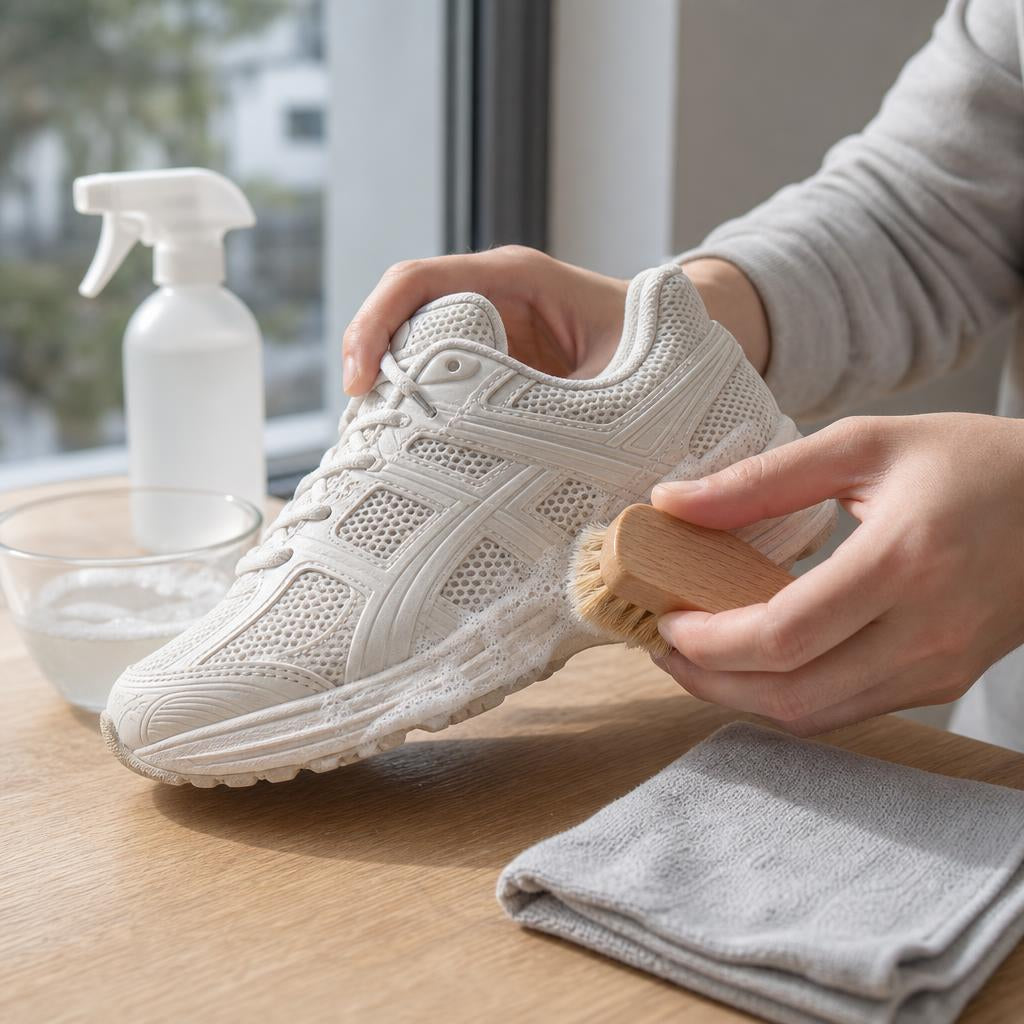
Textile and mesh are common in running shoes and lightweight sports sneakers. These materials are breathable, but they also absorb dirt more quickly. Use a soft brush or microfiber cloth with minimal moisture. Work carefully, because mesh can fray or stretch if you apply too much pressure. Do not rinse them under the tap; instead, remove cleaner residue with a clean damp cloth. See also: Cleaning fabric/mesh sports shoes.
For lighter dirt, this is usually enough to make sports shoes look whiter again or visibly fresher. For deeper stains, you can repeat the treatment, but give the material time to dry in between so you can properly assess the result.
Cleaning leather sports shoes
Cleaning leather sports shoes requires a gentle approach. Use a pH-neutral cleaner or sneaker cleaner and wipe the leather with a cloth or soft brush. Do not soak leather. After cleaning, it is smart to give the material some nourishment or care again if needed, so it stays supple and does not dry out.
Cleaning white leather sports shoes often works well as long as you act quickly when dirt and scuffs appear. The combination of a soft brush, microfiber cloth, and mild cleaner is especially safe and effective.
Cleaning suede sports shoes
Cleaning suede sports shoes is more delicate than cleaning smooth leather or textile. Use as little moisture as possible and preferably work with a special suede brush or a suitable suede solution. Always wipe gently in the direction of the nap. Treat stubborn spots locally, not by soaking the entire shoe.
If you want to clean suede sports shoes without flattening the texture, aftercare is important. Once dry, you can gently brush the fibers back up. For delicate or expensive pairs, professional cleaning is often the safest choice.
Cleaning nubuck sports shoes
Nubuck looks similar to suede, but it has its own finish and therefore also needs careful treatment. Use minimal moisture, no aggressive all-purpose cleaners, and definitely no harsh scouring sponges. Clean locally, let the shoes dry slowly, and then brush the surface back up so the look stays even.
Cleaning white sports shoes and making them white again
Cleaning white sports shoes is one of the most searched variations within this topic. That makes sense, because mud, dust, grass stains, and yellowed edges show up immediately on white shoes. Cleaning white sports shoes works best when you act quickly and do not let dirt set in.
Always start by removing dry dirt. Then clean the upper with a mild cleaner and a soft brush or cloth. Work in thin layers and it is better to clean lightly twice than too wet once. You can treat sole edges separately, because that is where built-up street dirt and black streaks often sit.
If you want to make sports shoes white again, pay extra attention to the drying process. Do not place white shoes in full sun or against a radiator. That is exactly what can make white materials or glue edges turn yellow. With white mesh or textile shoes, it is important to leave as little product residue as possible, because that can create visible rings after drying.
Can you clean sports shoes with baking soda?
Cleaning sports shoes with baking soda is a well-known home method, but it is not always the best choice. Baking soda can help with odor issues or light dirt, but it is not a universal cleaner for every material. Especially with suede, nubuck, and some colored materials, you should be careful because residue can remain or the surface can be affected.
If you use baking soda, do so sparingly and in a targeted way. For odor inside the shoe, you can let a small amount sit briefly and then remove it thoroughly. For the upper, a material-safe sneaker cleaner is usually the better choice. So yes, cleaning sports shoes with baking soda can help in some cases, but it is not automatically the safest or most effective solution.
Can sports shoes go in the washing machine?
Sports shoes washing machine is a widely searched term, but it is usually not the recommended route. The washing machine may seem easy, but spinning, water pressure, and heat can damage glue, shape, cushioning, and material structure. Especially with glued sneakers, suede panels, leather details, and technical sports materials, that risk is high.
If you have sturdy textile shoes without delicate finishes, washing may seem tempting. Still, manual cleaning is usually safer. That way, you stay in control of moisture, pressure, and drying time. If you want to know more about that choice, read Sneakers in the washing machine: yes or no?.
Cleaning smelly sports shoes
Cleaning smelly sports shoes is not only about visible dirt, but also about bacteria, moisture, and built-up odor in the lining and insole. So after wearing them, always let your shoes air out properly first. If possible, remove the insoles and clean them separately with a slightly damp cloth, or replace them when they are worn out.
Do not immediately use heavy perfumes or aggressive products to mask odor. That usually does not solve the cause. Targeted cleaning of the inside, combined with proper drying, works better. For stubborn odor problems, a professional deep clean with steam cleaning can be a good solution, because it tackles dirt, bacteria, and odor more deeply without aggressive chemicals.
What is the best cleaning product for sports shoes?
The best cleaning product for sneakers or sports shoes is mild, material-safe, and suitable for regular use. Avoid aggressive all-purpose cleaners, bleach, and strong degreasers. These can affect colors, damage fibers, and weaken glued areas.
- For leather: a mild sneaker cleaner and soft cloth
- For suede and nubuck: a suitable suede solution and special brush
- For mesh and textile: a soft brush, microfiber cloth, and minimal moisture
- For protection afterward: a water- and dirt-repellent sneaker spray
If you prefer a complete solution, a set with cleaner, brush, and microfiber cloth is practical. That allows you to clean sports shoes properly without improvising with household products not meant for sneakers. For example, check out our complete sneaker cleaning kits.
Common mistakes when cleaning sports shoes
- Using too much water, which puts stress on materials and glue
- Using a brush that is too hard on mesh, suede, or nubuck
- Drying shoes on a radiator, in the dryer, or in direct sunlight
- Using bleach or aggressive cleaners on white shoes
- Not testing first on a small hidden area
- Making dirt wet immediately instead of brushing it off dry first
When should you clean them yourself and when choose professional cleaning?
Light dirt, dust, surface scuffs, and normal signs of wear can usually be treated well at home. But if you are dealing with deep stains, bad odor, delicate materials, or a valuable pair you do not want to risk, professional cleaning is a smart choice. Especially with combinations of leather, suede, nubuck, and mesh, a material-specific approach matters.
At HypedPair, you can come to us for both products and a cleaning service. With a material-safe cleaning kit, you can clean your sports shoes at home using cleaner, a brush, and a microfiber cloth. For more difficult cases, there is professional sneaker cleaning with controlled steam cleaning, attention to seams and perforations, material-focused aftercare, and protection afterward. That is especially interesting if you want to clean sports shoes without guessing with the wrong product.
FAQ about cleaning sports shoes
What is the best way to wash sports shoes?
The best way is usually not really washing them, but cleaning them by hand. First remove the laces and dry dirt, then use lukewarm water with a mild cleaner and let the shoes dry slowly at room temperature.
Can you clean your shoes with baking soda?
Yes, baking soda can help against odor and sometimes with light dirt, but use it carefully. It is not suitable for every material, and a dedicated sneaker cleaner is often safer.
What is the best cleaner for sneakers?
A mild, material-safe cleaning product that is suitable for sneakers. Avoid aggressive household cleaners, especially on suede, nubuck, leather, and glued parts.
How do you remove black marks from your shoes?
Work locally with a soft cloth or brush and a small amount of sneaker cleaner. Do not scrub hard, because that can make the surface dull or damaged.
How do I make sports shoes white again?
By first removing dry dirt, then cleaning gently, and wiping away product residue properly. Always let white shoes dry out of direct sunlight to help prevent yellowing.
How often should I clean my sports shoes?
That depends on how often you wear them. Light maintenance after use and a more thorough cleaning once dirt remains visible help keep your shoes looking good for longer.
Can I wet-clean suede sports shoes?
Preferably as little as possible. Use limited moisture and a suitable suede method. Fully soaking them increases the chance of stains and texture loss.
How do I stop sports shoes from getting dirty again so quickly?
Treat dry shoes with a protective spray and remove new dirt as quickly as possible. Prevention makes later cleaning much easier. Use sneaker brushes that match delicate materials where needed.
This article was written by Marijn van der Heijden.
★★★★★ 4.9/5 uit 400+ reviews
Scoor jouw volgende exclusive pair
Geverifieerd op echtheid, scherpe prijzen en snel verzonden. Ontdek de meest gewilde sneakers van dit moment.
Shop sneakers

Leave a comment
This site is protected by hCaptcha and the hCaptcha Privacy Policy and Terms of Service apply.