



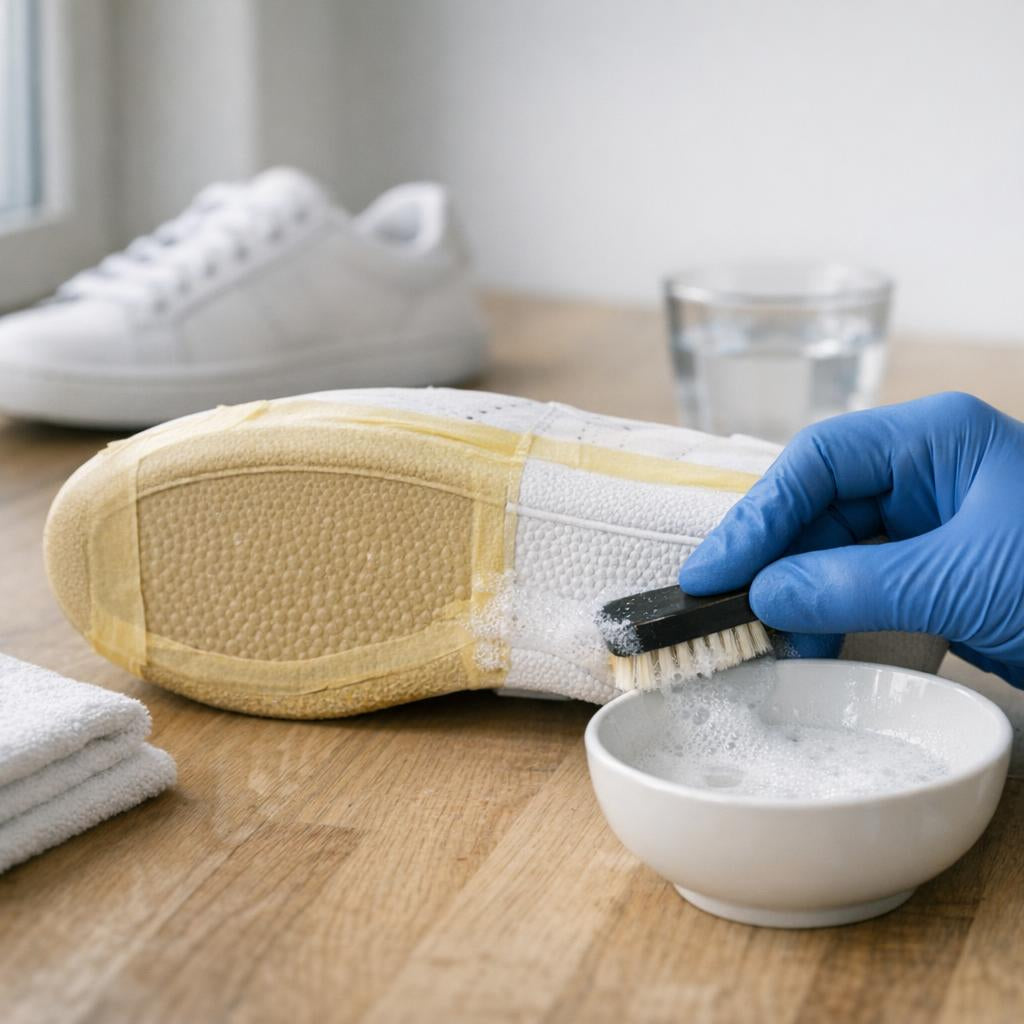
Yellowed soles look older than they really are. With the right approach, you can make yellowed shoe soles white again without damaging the material or glue. Below, you’ll find a practical guide with safe methods, clear steps, and prevention tips, so you can restore yellowed soles effectively and for the long term.
Why do soles turn yellow?
Discoloration is mainly caused by oxidation. Rubber and EVA react to oxygen, UV light, and heat, causing the material to turn yellow. Dirt, street dust, and dyes from clothing can also build up and make yellowing worse. Sweat and cleaning products with bleach or strong solvents can speed up the process. The good news: much of the yellowing sits on or just below the surface and can largely be corrected with cleaning or color restoration. For a specific step-by-step approach, see Clean white sneaker soles.
Preparation and basic cleaning
Always start by removing dry dirt. Loosen sand and dust with a set of Sneaker brushes (sole edges and grooves) and wipe the sole edges with a lightly damp cloth and lukewarm water with a drop of pH-neutral dish soap. This prevents you from rubbing dirt into the pores during deep cleaning. If needed, tape off the edges of the upper with painter’s tape, especially on suede or mesh. Never clean shoes in a washing machine and do not soak them in hot water, as glue can loosen. Test all products on an inconspicuous area first and work in a well-ventilated space. Pat dry after the basic cleaning and let the soles air-dry briefly before continuing.
Deep cleaning with a sneaker cleaner
A specialized Shoe sole cleaner for yellowed soles is the safest route for many types of yellowed soles, or choose a pH-neutral Sneaker cleaner for an all-in-one approach. Choose a pH-neutral foaming or gel cleaner suitable for rubber and EVA. Apply a small amount to a soft or medium brush and spread the product evenly over the sole edges. Let it sit briefly so it can loosen dirt and oxidation residue, brush with even circular motions, and wipe away the foam in between with a clean, lightly damp cloth. Repeat locally on stubborn areas and avoid excessive scrubbing on soft, porous midsoles. Work carefully around seams and glued sections to limit mechanical stress. Rinsing is usually not necessary with leave-on cleaners, but follow the label of your product. Finally, let the shoes dry at room temperature out of direct sunlight. This method restores the visual whiteness of lightly to moderately yellowed soles and is safe for regular maintenance.
Household remedies: 3 percent hydrogen peroxide, baking soda, and toothpaste
For more stubborn yellowing, you can make a paste from 3 percent hydrogen peroxide and baking soda. Mix until you get a creamy consistency that does not drip, apply a thin layer to the yellowed areas, leave it on for 15 to 30 minutes, and rub gently with a soft brush. Then wipe it off carefully with a damp cloth and repeat if necessary. Peroxide works on surface discoloration, but use it sparingly and only in low concentrations. Wear gloves, avoid contact with textiles and colored areas, and always test beforehand.
White toothpaste without microbeads is a mild alternative for light discoloration. Apply a small amount, brush it in briefly, let it sit for a few minutes, and wipe clean. Don’t expect miracles with deep oxidation, but as a quick refresh it works well without much risk.
White coating or sole restorer when cleaning is not enough
If the yellowing sits deeper in the material or there are permanent stains, a white midsole coating or sole restorer can help. First clean and degrease the soles thoroughly. Then apply a very thin, opaque layer with a sponge or brush and let it dry completely. If needed, work in two to three ultra-thin coats for an even result. Some products require a sealer for extra protection against dirt and UV. This approach is cosmetic, but it quickly gives the soles a fresh, even white look again when cleaning alone is not enough. If you want to be sure of the best result or home cleaning does not work, consider having your sneakers professionally cleaned.
How to prevent new yellowing
Clean soles right after use with lukewarm water and a mild cleaner so dirt and dyes do not get a chance to build up. Store your sneakers in a dry, dark place away from direct sunlight, heat sources, and ozone-rich spots such as near certain electrical devices. Rotate wear so soles can dry properly and consider a protective sneaker spray that repels UV and dirt. Regular light maintenance is more effective and safer than occasional heavy scrubbing.
Frequently asked questions
How do you make yellowed rubber white again?
Start with a pH-neutral sneaker cleaner to remove surface dirt and yellowing. If that is not enough, use a thin paste of 3 percent hydrogen peroxide and baking soda, let it sit briefly, and wipe it off carefully. If it still does not work, apply a white midsole coating or sole restorer in several thin layers for an even white result. Test every product first and avoid aggressive bleach products that can damage glue and materials.
Can you make yellowed rubber whiter again without damage?
Yes, as long as you work gently and patiently. Choose pH-neutral cleaners, low-concentration peroxide, and soft brushes. Work in short sessions, let products sit in a controlled way, and do not force results with hard scrubbing or high heat. Always dry at room temperature and keep shoes out of direct sunlight while drying. This reduces the risk of micro-damage, loose glue, and new yellowing.
How can I de-yellow a yellowed shoe sole?
You can de-yellow with a special unyellowing gel that is activated under UV light or sunlight. Apply the gel thinly to the yellowed zones, protect unrelated parts, expose it in a controlled way, and remove residue according to the instructions. This method works especially well on rubber and semi-translucent soles. Overexposure or heat can cause browning, so work step by step and check progress in between. As an alternative, you can use a white coating if deeper oxidation remains visible.
With these methods, you can make yellowed soles white again in a safe, material-friendly way. Work calmly and consistently for the best result.
This article was written by Marijn van der Heijden.

Leave a comment
This site is protected by hCaptcha and the hCaptcha Privacy Policy and Terms of Service apply.