




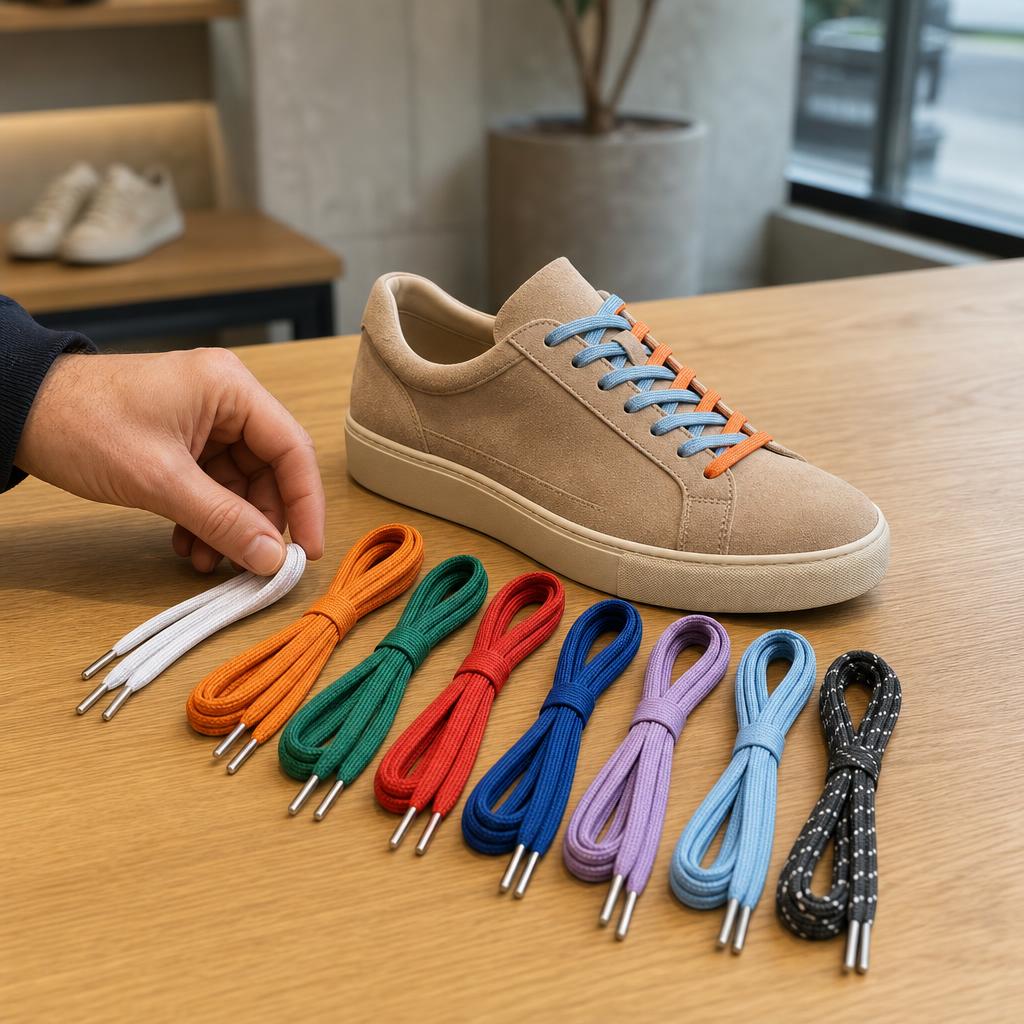
With the right shoelace colors, you can give sneakers a completely different look in just a few seconds. Whether you go for colored laces that subtly match your shoe, choose contrast with orange, green, or red laces, or experiment with 2-color laces, color directly shapes the overall feel. For sneaker lovers, that is a quick way to make a basic pair more personal, more eye-catching, or cleaner. Especially on models like Adidas Campus, New Balance, Yeezy, or Asics, a different lace color can make the difference between standard and standout.
On this page, you will read how to choose color, which types of shoelaces exist, when round or flat laces work better, and how to avoid ordering a color or length that does not work well with your sneakers. That makes it easier to choose from popular options like blue laces, yellow shoelaces, green shoelaces, orange shoelaces, red shoelaces, or black shoelaces.
Which lace color works best with your sneakers?
The best color almost always depends on the effect you want to create. If you want a calm look, choose a lace close to the color of the shoe. If you want more contrast, a different color usually works better. That is why white sneakers often work well with both white flat laces and brighter shades, while darker sneakers can look especially strong with off-white laces, cream-colored laces, or even fuchsia laces.
You can roughly choose color in three ways:
- Tone-on-tone - for example blue laces in blue sneakers or dark green laces in olive green shoes.
- Light contrast - such as off-white laces in beige, khaki, or cream sneakers.
- Statement contrast - for example orange shoelaces in white sneakers, purple laces in grey sneakers, or black and white laces for a more striking effect.
For many people, the middle ground works best: a visible color change, but not so bright that the lace takes all the attention. Think of khaki laces, olive green laces, burgundy tones, or broken-white variations. They give your sneakers more character without looking too busy.
Popular shoelace colors and how to combine them
Some colors are broadly versatile, while others are mainly interesting as an accent. Below, you can see which directions often work well with sneakers.
White and light laces
White remains one of the most popular options because it looks clean, sporty, and versatile. White flat laces work well with retro sneakers, skate shoes, and low-tops. If you want something slightly softer than bright white, off-white laces or cream-colored laces are often nicer on beige, off-white, and vintage models. White round laces can also work well, especially on more casual or minimalist sneakers.
Black and dark laces
Black shoelaces usually create a sleek, calm look. On black sneakers, they are safe and timeless, but black also works strongly as a contrast on white or grey shoes. If you want a more luxurious twist, you might look at black satin laces, although these are more style-driven and less typical for everyday sneakers.
Color accents like red, yellow, green, and orange
If you want a sneaker to really stand out, color accents are ideal. Red and burgundy laces add warmth and depth. Yellow laces and yellow shoelaces immediately draw attention and often work well on dark or neutral sneakers. Green laces, dark green laces, and olive green laces are popular with earth tones, utility looks, and vintage colorways. Orange laces and orange shoelaces instantly make a pair feel sportier and more energetic.
Blue, purple, and pink tones
Blue laces are surprisingly versatile, especially on white, grey, and navy sneakers. If you are looking for something specific, round blue laces can be interesting for models that match better with a rounder lace. For a more creative look, you can also think about purple, lilac, or pink accents. Those give a sneaker a more unique and fashion-focused appearance.
What do different shoelace colors mean?
This question comes up a lot, but in practice the meaning of colored laces is usually less fixed than people online sometimes claim. For most sneaker lovers, color is mainly about style, personal taste, and how well it matches the shoe. So red, yellow, green, or black laces usually do not carry a universal message. They are mostly just a visual choice.
Only within specific subcultures or scenes have certain colors sometimes had their own meaning. For everyday use, the main rule is simple: choose the color that fits your outfit, your sneaker, and the effect you want to create. On a modern sneaker page, practical color choice is therefore much more relevant than symbolism.
Which types of shoelaces are there?
Color is not the only thing that matters. The lace type also affects how your sneakers look and how they wear. You can also see that in the search intent behind terms like colored laces and what types of shoelaces are there.
Flat laces
Flat laces are the most common choice for sneakers. They often create a sporty, full look and sit nicely on the tongue of the shoe. That makes them popular for lifestyle sneakers, retro models, and streetwear combinations. White flat laces in 150 cm are, for example, relevant for higher sneakers or pairs with more eyelets.
Round laces
Round laces look a bit more refined and compact. They are often used on casual shoes, some runners, and models with a slightly neater appearance. If you want a subtle upgrade, white round laces can be a good choice.
Wide laces
Wide laces give sneakers more volume and stand out more. They are often chosen for a bold look on, among others, Adidas Campus-style sneakers. In bright colors, they attract even more attention than standard flat laces.
Reflective laces
Reflective laces combine color with visibility and a technical look. During the day they often look clean, while under light they stand out more. That makes them interesting if you want a modern or performance-inspired look.
Elastic laces
Elastic laces are mainly practical. You do not need to retie your shoes as often, and they are quicker to put on and take off. If comfort and convenience matter to you, elastic laces with a closure can be a logical choice. They are especially handy for sneakers you wear often.
How to choose not only the right color, but also the right length and thickness
A great color only really helps if the lace also fits properly. That is why you should always look at three things together: color, length, and thickness. Many bad purchases happen because someone only pays attention to color. Especially with searches like white flat laces 150 cm, you can see that length is directly part of the choice.
- Length: match the length to the number of eyelets and the way you tie your laces. Low sneakers usually need less length than high-tops.
- Thickness: a lace that is too thick moves poorly through small eyelets, while a lace that is too thin can look lost in wider sneaker eyelets.
- Shape: flat, round, or wide laces give the same shoe a clearly different look.
If you are unsure about the size, preferably remove your current laces first and measure them. That is more reliable than guessing based only on the model. Also remember that flat laces often look wider when loose than when they are tightened in the shoe. Also read what shoelace length per sneaker model.
Practical color combinations by sneaker color
If you find choosing difficult, these combination directions often work well in practice.
White sneakers
- Clean look - white flat laces, white round laces, or off-white laces
- Contrast - black and white laces or black shoelaces
- Color accent - red shoelaces, yellow shoelaces, green shoelaces, or orange shoelaces
Black sneakers
- Minimalist - black shoelaces
- Softer contrast - cream-colored or off-white laces
- Statement - yellow, red, or blue laces
Beige, cream, and earth tones
- Subtle - khaki laces, olive green laces, dark green laces
- Vintage feel - off-white laces
- More color - burgundy, blue, or orange as an accent
Blue or green sneakers
- Matching - blue laces or green laces
- Quiet contrast - white or off-white laces
- Bold - yellow, red, or purple
2-color laces and mix-and-match styling
2-color laces are interesting if you really want to personalize your sneakers. You can approach that in two ways: two different colors in the left and right shoe, or one lace that combines two colors. Especially on simple sneakers, that quickly creates a standout result.
A few combinations that often work well:
- white and black for a graphic effect
- off-white and olive green for a vintage look
- blue and white for fresh runners
- red and black for more contrast
- yellow and black for a clear statement
Then keep the rest of the sneaker fairly calm. The more eye-catching the laces, the fewer extra color accents you need in the shoe itself.
When should you choose a bold lace and when a calm base?
A calm base usually works better if your sneaker already has many panels, color blocks, or visible branding. In that case, white, black, cream, or tone-on-tone laces create balance. If your sneaker has a simpler upper, you can experiment more easily with colored laces like fuchsia, purple, or orange.
Usage also matters. For everyday wear, many people choose safe colors that go with everything. For a specific outfit, festival fit, or streetwear look, you can go more outspoken. So the right choice is not only about taste, but also about how often and with what you wear the sneakers.
Buying shoelace colors for sneakers: what should you look for?
If you are looking for new sneaker laces in all colors, look beyond just the product photo. Pay attention to material, shape, length, and how strong the color appears in real life. For sneakers, colorfast and durable laces are nice because they keep their look longer and fray less quickly. It also helps if they stay in the eyelets well and remain firmly tied.
For anyone who wants to upgrade or personalize sneakers, flat laces, wide laces, round laces, reflective laces, and elastic laces are especially interesting options. At Hypedpair, the focus is on premium sneaker laces in different colors and lengths, so you can more easily find a combination that fits your pair and your style.
Frequently asked questions about shoelace colors
Which lace color goes with everything?
White, black, and off-white are the most versatile. They are easy to combine with different sneakers and outfits, making them a safe choice if you want one pair of laces that works often.
What looks better on white sneakers: white or colored laces?
That depends on the effect. White laces give a clean, classic look. Colored laces make white sneakers more playful and more noticeable. Yellow, green, red, and orange often work well as an accent.
What do red laces mean?
In most modern contexts, red laces do not have one fixed general meaning. Usually, they are chosen because they are visually strong and create a lot of contrast on neutral sneakers.
Are flat or round laces better for sneakers?
For many sneakers, flat laces are the standard because they look sporty and work well with wider eyelets. Round laces work better if you want a subtler or neater appearance.
How do I know which lace length I need?
The easiest way is to measure your current lace. Also look at the number of eyelets and whether you tie your laces tight, loose, or with an extra loop. We also have a guide for this per sneaker model.
Are satin laces suitable for sneakers?
They can be, but it is mainly a style choice. White satin laces and black satin laces create a more eye-catching, fashion-led look, but they are less classic than standard sneaker laces.
Which lace color works with beige or cream sneakers?
Off-white, cream, khaki, and olive green often work very well. They match the warm undertone of the shoe nicely and keep the look calm.
This article was written by Marijn van der Heijden.


Leave a comment
This site is protected by hCaptcha and the hCaptcha Privacy Policy and Terms of Service apply.