




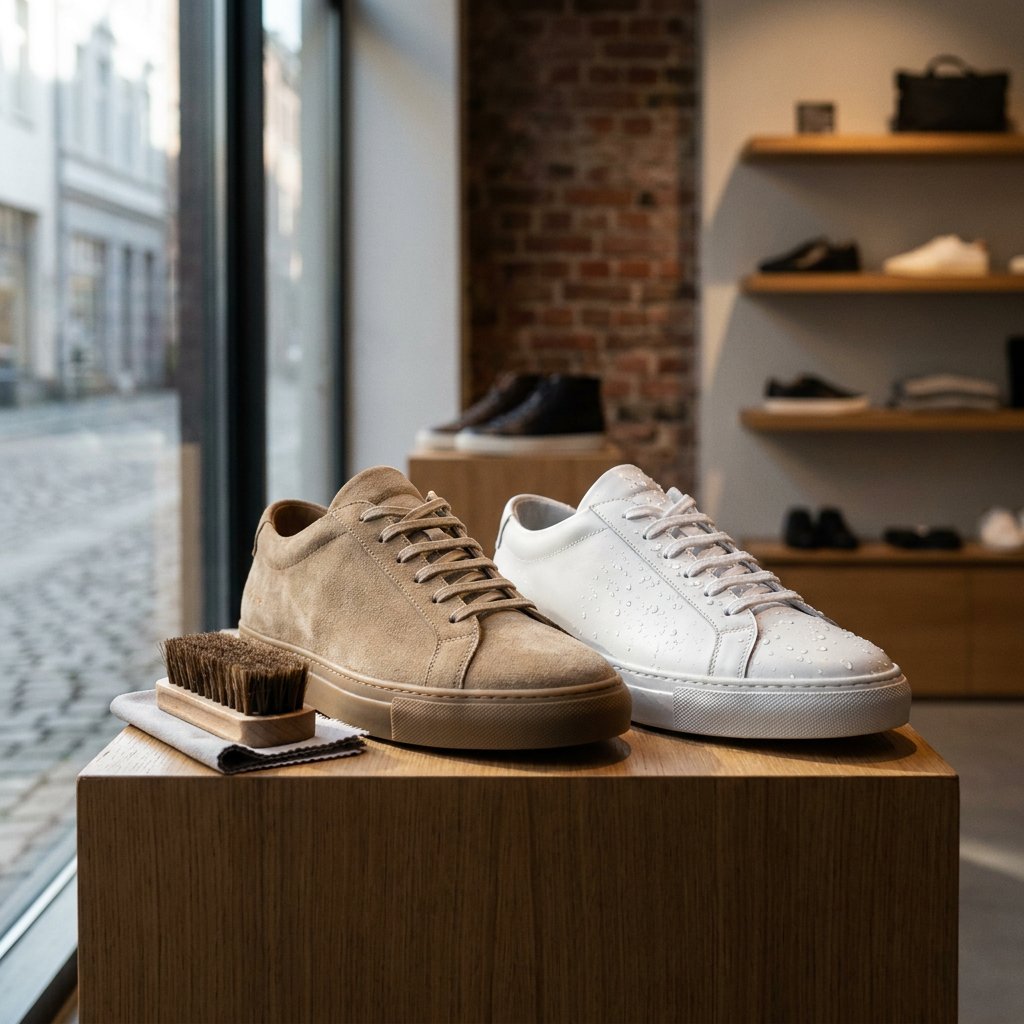
Not sure whether to choose suede or leather sneakers? Then your decision is not just about looks, but also about maintenance, water resistance, feel on foot and lifespan. Suede sneakers often look softer and more luxurious, while leather sneakers are usually more practical for everyday use. Which one is better depends on how and where you wear them. Below, you’ll find the real differences between suede and leather, so you can more easily decide which material best fits your sneakers and your routine.
Explore Our Collection
Shop Now →What is the difference between suede and leather in sneakers?
The biggest difference is in the structure of the material. Smooth leather uses the outer layer of the hide, which gives it a denser, smoother and stronger surface. Suede is made from the underside of the leather or from a split layer. That makes it feel softer and gives it that characteristic matte, velvety finish.
With sneakers, you notice that difference immediately in use. Leather is generally more resistant to moisture, easier to clean and often more suitable for heavy wear. Suede is more sensitive to water, dust and stains, but it gives many models a premium and more refined look. That is why you often see suede on lifestyle sneakers and leather panels more often on daily or all-round models.
Quick comparison: suede vs leather sneakers
| Part | Suede sneakers | Leather sneakers |
|---|---|---|
| Appearance | Soft, matte, luxurious and rich in texture | Sleek, smooth, classic and clean |
| Water resistance | Low without protection | Better resistance to moisture |
| Maintenance | Needs a careful, material-specific approach | Relatively easy to clean |
| Stain sensitivity | High | Lower |
| Lifespan | Good with proper care, but more delicate | Often lasts longer with normal use |
| Best use | Dry days, rotation, style-focused outfits | Everyday wear, changing conditions |
Which is better: leather or suede for sneakers?
There is no universal best choice. The right option depends on what matters most to you. If you want sneakers that are low hassle, easier to keep clean and better able to handle a rain shower, leather is usually the smarter option. If you care more about appearance, texture and a more luxurious finish, you will probably lean toward suede.
For many sneakerheads, the question is not just "which is better?" but mainly "which suits how I use them better?" If you wear your sneakers often, are out and about a lot or do not want to be careful all the time, leather scores higher. If you mostly wear your pair in dry conditions and want that soft premium look, suede may be the better match.
When suede sneakers are the better choice
- You mainly choose based on appearance and texture
- You mostly wear your sneakers in dry weather
- You rotate several pairs and do not wear them daily
- You are willing to brush and protect them regularly
When leather sneakers are the better choice
- You want a pair for everyday use
- You want less maintenance and quicker cleaning
- You are often outside in changing conditions
- You want a material that usually stays looking neat longer
Appearance and style: which look suits you better?
When it comes to style, suede and leather each have a clearly distinct character. Suede sneakers look warmer, softer and often slightly more exclusive. The texture catches light differently than smooth leather, which can make colors appear deeper and richer. Earth tones, grey, navy and soft pastels in particular often look great on suede.
Leather sneakers, on the other hand, give a cleaner and sharper look. White leather looks fresh and minimal, while black or dark leather is often a bit more versatile for everyday wear. If you want a sneaker that is easy to combine with many outfits, leather is often a safe choice.
On models with multiple panels, you often see brands combine both materials. That is not just for looks, but also for a balance between structure, sturdiness and comfort. Still, the difference remains visible: suede adds character, while leather adds sharpness and simplicity.
Comfort and feel in practice
In terms of comfort, suede usually feels softer right away. The material is more flexible and gives a softer touch. That does not automatically mean suede sneakers are more comfortable, because comfort also depends on the lining, sole, fit and construction of the model.
Leather can feel a bit firmer at first, but it often molds nicely to the foot as you wear it. Because of that, many people experience leather sneakers as stable and comfortable in the long run. With suede, the feel often stays immediately approachable, but the material does require more attention to keep looking good.
For daily walking and more intensive use, leather often feels slightly more robust. For casual wear and a more luxurious feel, suede offers a softer experience.
Which lasts longer: suede or leather?
In most cases, leather sneakers last longer than suede sneakers. That is because smooth leather has a more compact surface and is better able to handle friction, moisture and everyday dirt. Damage also often becomes visible less quickly than on suede.
Suede can still last a long time, but only if you maintain it properly and do not expose it unnecessarily to rain, mud or stubborn dirt. A dirty or wet suede sneaker shows marks more quickly, while leather is often easier to restore with a mild cleaner and protection afterward.
So if you ask "which lasts longer, suede or leather?", you will usually get the same answer: leather wins on durability in practical everyday use. Suede wins more on appearance than on wear resistance.
Water resistance and stain sensitivity
One of the biggest differences between suede vs leather sneakers is how they handle moisture. Suede has an open, fibrous structure and therefore absorbs water more quickly. Without a protective spray, rain, wet streets and even small splashes can already cause visible spots. Dust and grease also sink into the material more easily.
Leather has a more closed surface and is therefore more resistant to moisture and dirt. That makes leather sneakers more suitable for unpredictable weather and intensive wear. Keep in mind that leather is not automatically fully waterproof. Leather sneakers also stay looking good longer if you protect them beforehand and clean them after wearing.
For both materials, prevention makes a big difference. A good protection spray helps dirt and moisture stick less quickly, but with suede that step is truly essential. So choose a sneaker protection spray that is suitable for suede and leather, and read more about how to waterproof and protect sneakers.
Care: suede sneakers vs leather sneakers
Maintenance is the deciding factor for many people. Leather sneakers are generally easier to clean and protect. Suede requires a more careful routine, because too much moisture, the wrong brushes or aggressive products can damage the texture.
Caring for suede sneakers
With suede, it is best to work as dry as possible. Always start by removing loose dirt with a special suede brush. For dry stains, a suede eraser often works better than water. Only for more stubborn dirt should you use a suitable cleaner very sparingly, as long as it is safe for suede or nubuck. After that, brush the nap back up so the material regains its soft texture. If you want to go deeper into this, you can also read more about cleaning suede sneakers.
Important basics for suede care:
- brush regularly to remove dust and surface dirt
- use a suede eraser for dry marks and spots
- work with minimal moisture exposure
- always let sneakers dry at room temperature
- treat them preventively with a protection spray
Caring for leather sneakers
Leather is more forgiving. First remove dry dirt with a soft brush or cloth. Then you can use a mild cleaner, preferably pH-neutral or specifically made for sneakers. Do not work too wet, wipe away residue right away and let the shoes dry calmly. After cleaning, a protective spray helps reduce new dirt build-up. For a step-by-step explanation, you can read more about cleaning leather sneakers.
A safe routine for leather sneakers is usually:
- remove loose dirt dry
- clean with a mild cleaner and soft brush
- wipe with a microfiber cloth
- let them dry without direct heat
- protect again for daily wear
Cleaning suede or leather: which is easier?
If you look purely at ease, leather sneakers are clearly easier to clean. Dirt more often stays on the surface, so you get quicker results with a soft brush, cloth and a suitable cleaner. With suede, dirt gets trapped between the fibers more easily, and you have to work more carefully to avoid damaging the color, texture and nap.
That does not mean suede is impossible to keep looking good. It simply requires more discipline and the right tools. The wrong treatment, such as cleaning too wet or scrubbing hard, leads to visible damage more quickly on suede than on leather.
Which care products do you need?
Good sneaker care starts with products that match the material. One universal approach rarely works well, especially not with suede vs leather sneakers. For suede, dry tools matter more, while leather responds well to mild cleaning and protection.
| Material | Useful tools | Purpose |
|---|---|---|
| Suede | Suede brush, suede eraser, protection spray | Loosen dirt, restore the nap, protect against moisture |
| Leather | Soft brush, microfiber cloth, mild cleaner, protection spray | Clean without damage, keep the surface neat, protect |
At HypedPair, that matches what sneaker owners really need. Think of suede care products with a brush and eraser for suede, a Sneaker Cleaning Kit for safe cleaning and a HypedPair Sneaker Protection Spray for extra protection of suede, leather, nubuck and canvas. For smooth leather, there are also leather care products that help keep the material neat and protected.
When should you choose professional cleaning?
Sometimes cleaning them yourself is not the smartest move. Especially with premium sneakers, deep stains or delicate materials such as suede and nubuck, professional cleaning can remove a lot of risk. That also applies when you are not sure exactly which material is on your sneaker, or when a pair has panels made from different materials.
A professional approach is especially smart for:
- stubborn stains that do not disappear with dry brushing
- combinations of leather, suede, nubuck and mesh in one sneaker
- discoloration or flattened nap on suede
- deep dirt around seams, perforations or edges
- pairs you would rather not risk cleaning yourself
HypedPair also offers a professional steam-cleaning service for this, where the safest approach is chosen per material. For leather, that means controlled cleaning and protection, and for suede it means careful work with minimal stress and restoring the nap afterward.
Which sneakers fit your use better?
Still not sure whether to choose suede or leather? Then mainly look at your daily use. That often gives you an answer faster than taste alone.
For everyday wear
Leather sneakers are usually the stronger choice if you want a pair you can wear often without thinking too much about it. They are easier to clean, better against changing conditions and often keep their neat appearance longer.
For style and rotation
Suede sneakers are ideal if you rotate multiple pairs and consciously choose for looks and detail. Especially in dry seasons or as a second or third pair in your collection, suede really stands out.
For Dutch weather conditions
On rainy or unpredictable days, leather is more practical. Suede can still work well, but only if you protect it properly beforehand and accept that the material needs more attention. For people often on the move in the Netherlands or Belgium, leather therefore usually has the edge.
Frequently asked questions about suede vs leather sneakers
Is suede or leather better for shoes?
For practical everyday use, leather is usually better because it is stronger, easier to clean and more resistant to moisture. Suede is often better if you mainly value appearance, texture and a more luxurious look.
Which lasts longer, suede or leather?
Leather lasts longer than suede in most cases. The material is less sensitive to water, dirt and wear. Suede can also last a long time, but it requires more care and maintenance.
What are the benefits of suede shoes?
Suede shoes and sneakers have a soft, rich appearance and often give more depth to color and texture. They feel luxurious and work well with casual and premium outfits. Especially if you rotate your sneakers and maintain them well, suede is a strong style choice.
Are suede sneakers hard to clean?
They are not necessarily hard, but they are more delicate than leather. You need to work drier and more carefully, with a suede brush, eraser and suitable protection. Wrong products or too much water can quickly cause damage.
Can you wear leather sneakers in the rain?
Yes, leather sneakers handle rain better than suede sneakers, especially if they have been treated with a protection spray beforehand. Even so, it is smart to let them dry well after wet weather and clean them if dirt is on them.
Can you make suede sneakers water-repellent?
You can protect them better against moisture with a good sneaker spray, but they usually do not become fully waterproof. Protection does help water and dirt absorb less quickly.
What if your sneakers have both suede and leather?
Then treat each panel according to its material. Use a drier and gentler approach on suede, and a mild cleaner with a cloth or soft brush on leather. If in doubt, professional cleaning is often the safest option.
The best choice depends on how you wear your sneakers
With suede vs leather sneakers, it ultimately comes down to use, not just looks. If you want a pair that is strong, low-maintenance and versatile, leather is usually the best choice. If you are looking for texture, softness and a premium look, suede has a clear advantage. Both materials are strong in their own way, as long as you take their characteristics into account.
Want to protect your pair properly or clean them safely? Then it pays to use the right sneaker care. With the right tools for suede and leather, or with professional cleaning when needed, your sneakers will stay good-looking and wearable for longer.
This article was written by Marijn van der Heijden.

Leave a comment
This site is protected by hCaptcha and the hCaptcha Privacy Policy and Terms of Service apply.