




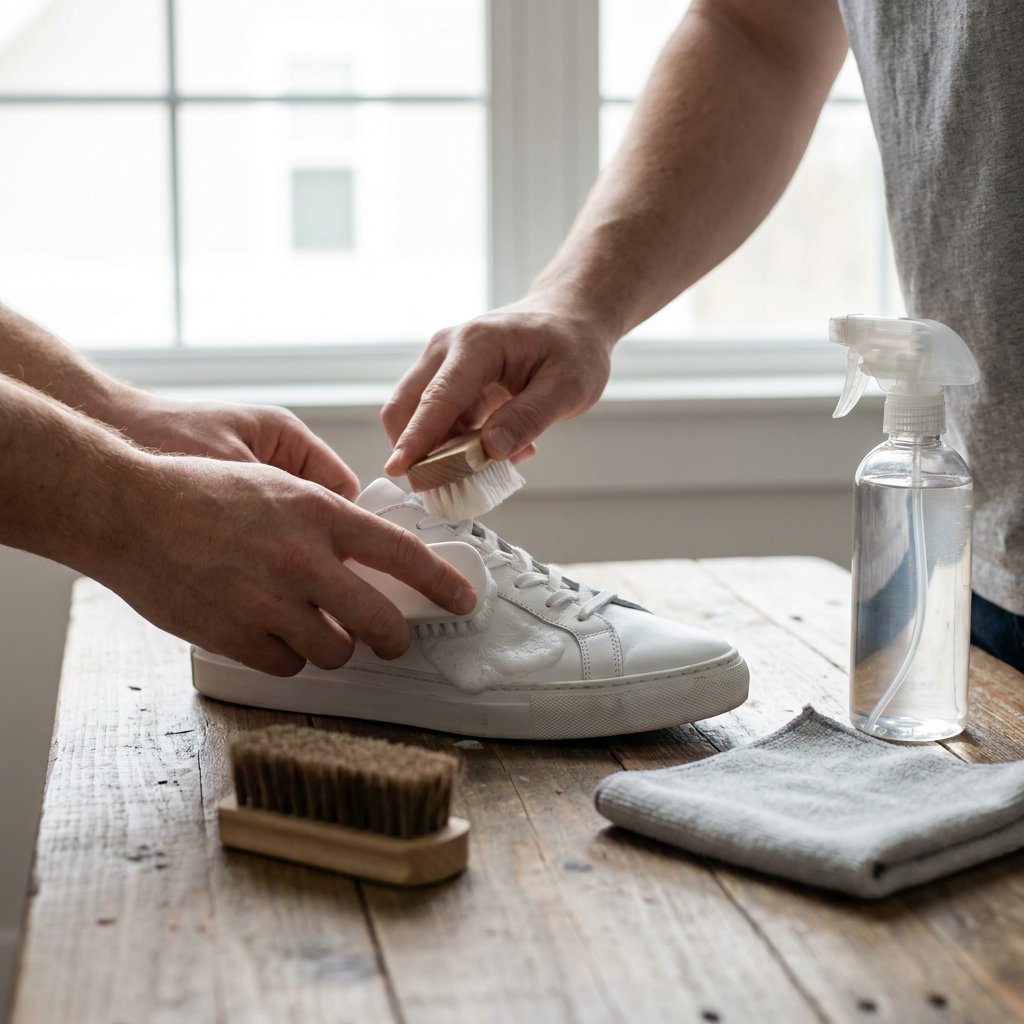
Do you want your sneakers to stay fresh, clean, and sharp-looking for longer without unnecessary wear? With the right approach, you can do much more than just surface cleaning. In this sneaker care guide, you’ll learn how to safely clean, protect, and refresh sneakers by material, when you should or shouldn’t spray them, and how to avoid damage from the wrong products or overly aggressive brushing.
Explore Our Collection
Shop Now →How do you care for your sneakers properly?
The best way to care for sneakers is simple: first remove dry dirt, then clean carefully, let them dry completely, and only then protect them. Many problems happen because steps are skipped or because the wrong products are used, such as aggressive all-purpose cleaners, overly wet cleaning, or drying them directly near a heat source.
A good basic routine looks like this:
- remove the laces and loose dirt
- clean with a soft brush, microfiber cloth, and a mild cleaner
- work carefully by material without scrubbing hard
- let sneakers dry at room temperature
- apply a protective spray afterward
For sneakers you wear regularly, light but consistent care often works better than the occasional aggressive deep clean. That helps prevent stains from setting in and keeps the material from aging faster.
Cleaning sneakers step by step
Cleaning sneakers doesn’t have to be complicated as long as you work in a structured way. The safest method is hand cleaning. That gives you control over the amount of moisture, the pressure on the material, and the spots that need extra attention.
1. Remove the laces and loose dirt
Always start dry. Remove the laces from your sneakers and gently loosen sand, dust, and caked-on dirt. Then use a soft brush to sweep the upper and the sole edges clean. This prevents you from rubbing dirt deeper into the material during wet cleaning.
2. Use a mild cleaner
Work with lukewarm water and a mild product that’s suitable for sneakers. A complete cleaning kit with cleaning serum, brush, and microfiber cloth is useful because the materials are matched to each other. Check out our complete cleaning kits if you want to start properly with one set right away. Avoid aggressive household cleaners, bleach, and too much soap, because they can cause discoloration, drying out, or glue damage.
3. Clean the upper carefully
Lightly dampen the brush and work with calm, circular motions. Don’t use too much pressure, especially on mesh, textile, or suede. With smooth leather you can often work a little more directly, but even there patience works better than hard scrubbing. Wipe away dirt and foam in between with a clean microfiber cloth.
4. Treat the sole edges separately
Sole edges and midsoles can often be cleaned a little more firmly than the upper. That’s exactly where black streaks and built-up street dirt show up quickly. Use a cloth or brush and work carefully along the edge so the sneaker immediately looks fresher.
5. Remove residue and let them dry well
Wipe away cleaning residue with a lightly damp cloth. If needed, stuff the shoes with paper so they hold their shape better while drying. Then let the sneakers dry at room temperature and don’t place them on a radiator, in direct sunlight, or under a hair dryer. Drying too fast can dry out leather and affect glue or shape. Follow these tips for drying sneakers without damage to avoid common mistakes.
Caring for sneakers by material
Not every pair needs the same treatment. If you want to maintain sneakers well, always look at the material first. That helps prevent loss of finish, discoloration, or damage to the structure.
Caring for leather sneakers
Leather benefits from regular, gentle cleaning followed by protection. If leather gets too dry, it can crease more easily or start to look dull. So first clean carefully, let the shoe dry, and then use a care product or protective spray that’s suitable for leather. For more tips on cleaning leather sneakers, extra material-specific guidance can help. For white leather sneakers, it’s especially important not to leave dirt on too long, because dark marks will show more clearly.
Cleaning suede and nubuck
Suede and nubuck are more delicate than smooth leather. It’s best to use a special suede set here and work as dry as possible. Hard scrubbing or too much water can flatten the fiber structure or cause stains. If you want to go deeper into cleaning suede sneakers, it’s best to work step by step. Always brush gently in one direction, treat specific spots carefully, and if in doubt test a product on an inconspicuous area first.
Cleaning mesh and textile
Mesh and textile absorb dirt into the fibers more quickly. That’s exactly why careful cleaning matters. Use a soft brush, minimal moisture, and several light passes instead of one harsh treatment. That reduces the risk of pilling, fraying, or pushing the stain deeper in.
Cleaning white sneakers and keeping them fresh
White sneakers usually need maintenance a bit more often because dirt, dust, and scuffs show up immediately. So don’t wait until they really look dull. Instead, choose regular refreshing. A quick treatment of the sole edges, a light clean of the upper, and a fresh protective layer already make a big difference.
Pay special attention to these points with white sneakers:
- clean dark streaks quickly before they set in
- don’t use aggressive products that can cause yellowing
- let white sneakers dry completely before storing them
- apply protector again after cleaning
Protecting sneakers with spray
After cleaning, protecting them is the logical next step. A good sneaker spray helps repel water and dirt without unnecessarily changing the look of the shoe. That’s especially useful for sneakers you wear outside often or use in changeable weather.
Protection isn’t just for new sneakers. It’s also smart to renew the protective layer after cleaning so dirt sticks less quickly and your next cleaning becomes easier. Want to know exactly how to do that? Read our guide on how to waterproof sneakers.
How often should you spray your sneakers?
How often you should spray your sneakers depends on how often you wear them and in what conditions. If you wear them outside regularly, spraying them again every few weeks to about once a month is often a good guideline. After a thorough cleaning, protecting them again is always a smart move.
If you notice that water no longer beads nicely on the surface and starts soaking in more quickly, that’s usually a sign that the protective layer is less effective.
When should you and shouldn’t you waterproof them?
- Do: after cleaning, on new sneakers, and before wearing them in wet or dirty weather
- Don’t: on sneakers that are still damp or dirty, because then you trap dirt or moisture inside
Refreshing your sneakers without washing them
Want to refresh your sneakers without fully washing them? You can often already achieve a lot with a dry brush, a lightly damp microfiber cloth, and a quick treatment of the sole edges. This works especially well for light dirt, dust, and surface marks.
Cleaning or replacing laces separately can also make a pair look neater right away. It also helps to let sneakers air out after wearing them instead of immediately putting them away in a closed closet or bag. Choose your storage spot carefully; read more about storing sneakers: box or display. Dealing with bad odors? Here’s how to remove odor from sneakers.
What you’re better off not doing
A big part of proper sneaker care is knowing what to avoid. A lot of damage isn’t caused by normal wear, but by the wrong cleaning habits.
- don’t just put sneakers in the washing machine
- don’t use aggressive cleaners or bleach
- don’t scrub hard on suede, nubuck, or mesh
- don’t dry sneakers on a radiator or in direct sunlight
- don’t apply protective spray to dirty or wet shoes
Useful care schedule by situation
| Situation | Approach |
|---|---|
| Lightly dusty sneakers | Brush off dry dirt and wipe with a microfiber cloth |
| Stains or visible street dirt | Gently hand clean with a brush and cleaner |
| After a thorough cleaning | Let them dry completely and then protect with spray |
| Suede or nubuck | Clean as dry as possible with suitable suede tools |
| White sneakers | Maintain lightly more often to prevent dull buildup |
When to clean them yourself and when to have them cleaned?
Light to normal dirt can usually be handled well yourself with the right products and a bit of patience. Think of a cleaning kit with cleaning serum, brush, and microfiber cloth, possibly supplemented with a sneaker spray for protection and a suede set for delicate materials. If you want to compare different sneaker care products, this makes it easier to put together a suitable basic setup.
For stubborn dirt, delicate materials, or sneakers you want to be extra careful with, professional cleaning can be the better choice. That’s especially relevant if you want to reduce the risk of color loss, water stains, or material damage. In addition to care products, Hypedpair also offers a professional sneaker cleaning service for sneakers that need a specialist approach.
Frequently asked questions about sneaker care
What is the best way to clean sneakers?
The best way is hand cleaning: first remove loose dirt, then work with a mild cleaner, soft brush, and microfiber cloth. That way you stay in control of the material and avoid unnecessary damage.
How often should I clean my sneakers?
That depends on how often you wear them. Light maintenance as soon as you notice dirt usually works better than waiting for heavy buildup. Regular refreshing extends their lifespan and keeps the material looking better.
Can sneakers go in the washing machine?
In most cases, that’s not the best choice. Water, heat, and movement can affect the shape, glue, color, and structure of sneakers. Hand cleaning is safer, especially for leather, suede, nubuck, and glued soles.
How can I refresh my sneakers without washing them?
Use a dry brush, wipe them down with a lightly damp microfiber cloth, clean the sole edges, and let them air out well. Clean or new laces also quickly give a fresher look.
How often should you spray your sneakers?
With regular use, every few weeks to about once a month is a practical guideline. After a thorough cleaning, spraying them again is always a smart idea.
Which products are useful for sneaker maintenance?
A good basic setup consists of a cleaning kit, a soft brush, a microfiber cloth, and a protective spray. For suede or nubuck, a separate suede set is recommended. If you want to limit creasing, you can also use anti-crease protectors.
This article was written by Marijn van der Heijden.

Leave a comment
This site is protected by hCaptcha and the hCaptcha Privacy Policy and Terms of Service apply.