




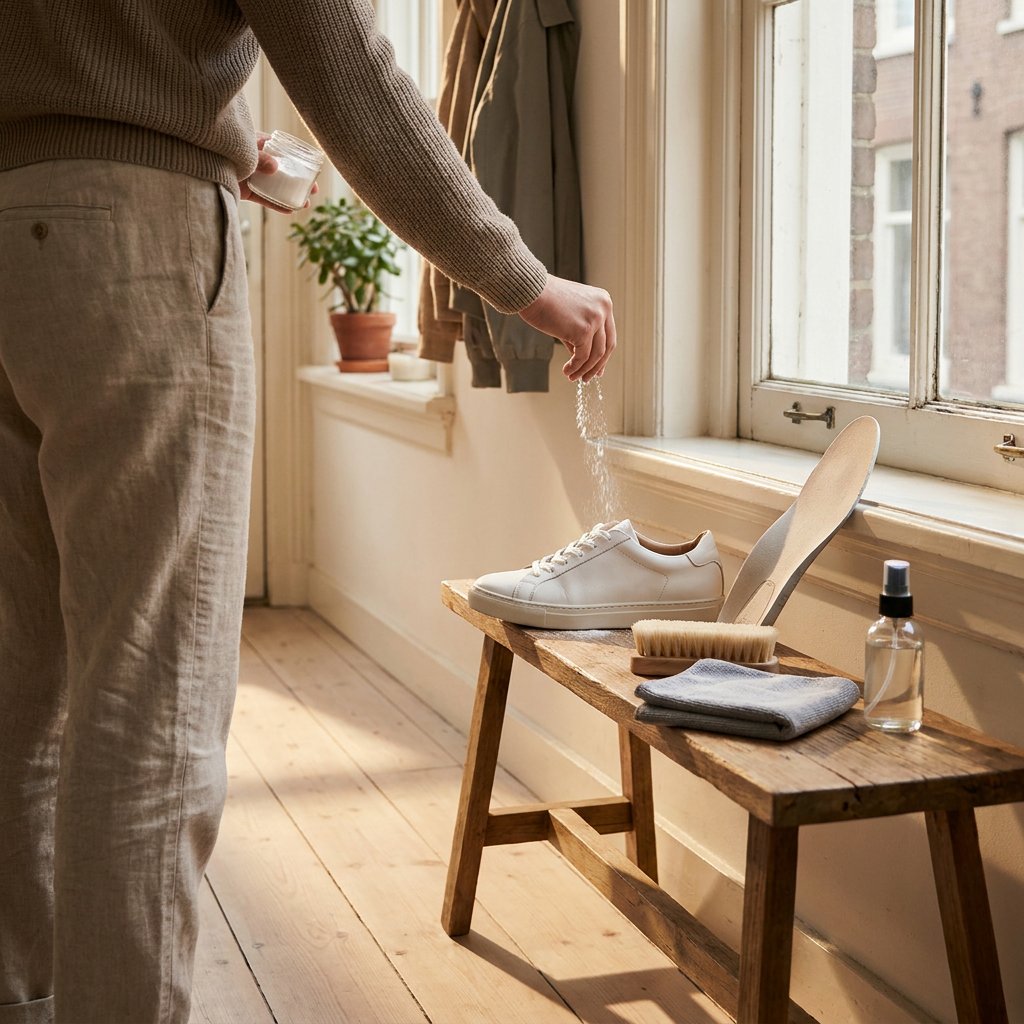
Do your sneakers no longer smell fresh, even though they still look fine on the outside? Then the problem usually is not just dirt, but mainly moisture, bacteria, and material that holds onto odor. With the right sneaker deodorizer tips, you can quickly reduce bad smells and prevent them from coming back again and again.
Explore Our Collection
Shop Now →The best approach is almost always a combination of cleaning, drying properly, and smart maintenance. Especially with sneakers made of mesh, canvas, leather, suede, or nubuck, it is important to choose a method that is effective against odor but also safe for the material. Below, you will read how to deodorize smelly sneakers, what you can put in your sneakers to make them smell better, and which solutions are actually practical.
Why sneakers start to smell
Sneakers usually start to smell because moisture builds up inside the shoe. Your feet naturally sweat, and that moisture gets into the lining, the insole, and sometimes even the cushioning of the sole. Sweat itself does not smell extremely strong, but in a warm, enclosed shoe, bacteria can multiply freely. Those bacteria break down the moisture and skin residue, and that is exactly what creates the unpleasant odor.
This happens especially quickly with sneakers because many models are worn for long periods: while commuting, at school, at the office, at festivals, or at the gym. If you also wear the same pair several days in a row, the material barely gets time to dry completely. Textile, mesh, and porous insoles in particular hold onto odor for longer.
If you want to remove sneaker odor, it helps not just to mask it with a fragrance product, but to tackle the source: moisture, bacteria, and built-up dirt inside the shoe.
How to deodorize smelly sneakers without damage
If you are wondering: how do you deodorize smelly sneakers? Then it is smart to work in this order:
- First let the sneakers air out and dry completely.
- Remove the insoles so moisture evaporates faster.
- Clean the inside and outside where needed with a material-friendly cleaner.
- Only then use an odor-absorbing or odor-refreshing solution.
- Prevent new odor with socks, rotation, and proper care.
That order matters. A deodorizer on damp or dirty sneakers often works only temporarily. The smell comes back quickly because the cause is still inside the shoe. Also check the step-by-step guide: remove sneaker odor: 7 steps.
Wear socks that actually wick away moisture
Of all the practical tips, this is one of the most important. Sneakers start to smell faster when you wear them without socks, because sweat goes straight into the lining and sole. Socks create a first layer that absorbs and wicks away moisture, giving bacteria less chance to build up inside the sneaker itself.
Ideally, choose socks with moisture-regulating properties. For everyday use, quality sports socks or socks with a good blend of natural and synthetic fibers often work better than thin fashion socks. Some materials hold moisture longer, while others dry faster and limit odor better.
Also important: always put on clean socks. If you wear sneakers with socks that are already damp or not fresh, you immediately bring the odor back into the shoe. If you get sweaty feet quickly, bring an extra pair of socks on long days. It is a simple habit that makes a big difference, especially in warm weather or when walking a lot.
Always let sneakers dry properly after wearing them
One of the most overlooked sneaker deodorizer tips is simply drying them well. Many odor problems start because sneakers are put straight into a hallway closet, gym bag, or car after use. The moisture stays inside the shoe, and that is exactly the environment where odor builds up.
After wearing them, loosen the laces slightly and remove the insoles if possible. Then place the sneakers in a dry spot with air circulation. Avoid direct heat from a radiator or hair dryer, because that can damage glue, shape, and material. This is especially important for leather, suede, and nubuck.
Do you want to remove shoe odor in 5 minutes? At most, you can quickly reduce the smell, but you cannot solve the real cause. For lasting results, the sneaker really has to dry out on the inside. That usually takes more time than a quick spray or home remedy. Read more about drying sneakers without damage.
Clean the inside instead of only masking the smell
If a sneaker has been smelling for a while, the odor is often trapped in dirt, old sweat residue, and bacteria in the lining or sole. Just putting something in the shoe to make it smell nice is not enough then. Cleaning is often the step that gives the biggest result.
For this, it is best to use a sneaker cleaner that is safe for the material. At Hypedpair, the focus is on safe sneaker care, where cleaning helps not only with visible stains but also with odors. A Sneaker Cleaning Kit with cleaner, brush, and microfiber cloth is especially useful if you want to thoroughly clean the outside, edges, tongue, and inside as well.
Work carefully and do not soak the shoe. With mesh and textiles, you can clean a little more thoroughly, while with leather, suede, and nubuck, it is better to work in a more controlled way and with the right products. After cleaning, let the sneakers dry at room temperature. Only then does an additional deodorizer or odor freshener really make sense.
Baking soda is one of the best quick solutions
Are you wondering what the best deodorizer for sneakers is? For a quick, cheap at-home solution, baking soda is often mentioned first, and for good reason. It helps absorb odors and is especially useful for sneakers that smell musty but are not extremely dirty otherwise.
Here is how to use it practically:
- Sprinkle a small amount of baking soda into both sneakers.
- Spread it lightly over the insole.
- Let it sit overnight.
- Shake or vacuum it out of the shoe well the next day.
Do not use too much, because powder residue can remain behind. For sensitive inner materials, it is smart to test a small area first. Baking soda is especially effective as a temporary odor absorber. With stubborn sneaker odor, you will usually also need cleaning and drying time.
Check your insoles if the smell keeps coming back
Sometimes the problem is not in the whole sneaker, but mainly in the insole. Insoles absorb a lot of moisture and hold odor for a long time. Especially if your sneakers are older or heavily worn, the smell can be deeply set there.
Take the insoles out of the shoe and smell the sole and the inside of the sneaker separately. If you notice that the insole is mainly the culprit, you usually have three options:
- clean the insole separately and let it dry completely;
- air out the insole and treat it with an odor-absorbing product;
- replace the insole if the smell has really settled into it.
New insoles can make a big difference, especially when the old ones are porous, worn out, or permanently musty. When replacing them, pay attention to fit, moisture absorption, and comfort. It is a simple step that is surprisingly often forgotten.
White vinegar can help, but use it carefully
White vinegar is often mentioned as a home remedy for shoe odor. That is because it can neutralize smells and help reduce stale buildup. Still, it is not the best choice for every sneaker, especially if you are dealing with delicate materials.
If you want to try it, mix a small amount of white vinegar with water and apply it very lightly to the inside, never soaking it. Then let the shoe dry completely in a ventilated area. It is better not to use this method casually on suede, nubuck, or sensitive glued areas.
For general sneaker care, a pH-friendly cleaning product is usually safer. Vinegar can be useful as an emergency fix, but it is rarely the best long-term method if you want to keep your sneakers fresh and looking good.
What can you put in your sneakers to make them smell good?
A common question is: what can I put in my sneakers to make them smell good? The short answer: choose something that absorbs odor or helps with drying, not just something that overpowers the smell.
- Baking soda for absorbing odor.
- Clean, dry shoe trees or paper to help absorb moisture.
- Removable insoles that you can air out separately.
- A mild sneaker deodorizer as a follow-up after cleaning.
Avoid solutions that make the shoe wet or leave behind a heavy perfume layer without addressing the cause. That may seem to work briefly, but it often just mixes with the existing smell.
Good foot hygiene keeps the smell from coming back
Even the best sneaker deodorizer works only moderately well if the source of the odor keeps being brought back into the shoe. That is why foot hygiene should always be part of a good approach. Wash your feet daily, dry them well, and pay extra attention to the space between your toes. After sports or in warm weather, put on clean socks as soon as possible.
If you sweat easily, do not wear your sneakers several days in a row without giving them a break. Rotating your pairs gives each shoe time to dry completely. That is often more effective than constantly trying to cover up odor again.
When professional cleaning is the smarter choice
Sometimes a sneaker keeps smelling, even after you have aired it out, cleaned it, and treated it. Then the odor is often deeper in the lining, sole construction, or built-up dirt that you cannot fully reach at home. In that case, a professional treatment can be smarter than continuing to experiment yourself.
At Hypedpair, odor removal is also linked to deep cleaning. A professional treatment such as steam cleaning and deodorizing sneakers can help tackle bacteria, dirt, and odors more thoroughly, with attention to the sneaker's material, shape, and finish. That is especially interesting for valuable sneakers or models made of leather, suede, nubuck, or mixed materials where you do not want to take risks.
How to keep sneakers fresher for longer after deodorizing
- Do not wear the same sneakers every day.
- Always air out sneakers after use.
- Remove insoles from the shoe regularly.
- Clean away dirt and sweat residue before odor builds up.
- Wear clean socks and avoid going sockless for long periods.
- Protect your sneakers after cleaning with a suitable protection spray.
That last point especially helps indirectly. A good protective layer makes it easier to keep your sneakers clean, so dirt and moisture build up less quickly. That also supports a fresher shoe over the long term. Choose a suitable protection spray for that.
FAQ about sneaker deodorizer tips
How do you deodorize smelly sneakers?
The best way is to first tackle the cause: let the sneakers dry, remove the insoles, and clean the inside where needed. Only after that should you use an odor-absorbing solution such as baking soda or a mild sneaker deodorizer.
What can I put in my sneakers to make them smell good?
The most practical options are odor-absorbing solutions such as baking soda or dry filling that helps absorb moisture. Anything that only adds a strong scent without cleaning usually works only briefly.
What is the best deodorizer for sneakers?
That depends on the cause. For light odor, baking soda often works well. For sneakers that also hold dirt or sweat residue, cleaning with a material-friendly sneaker cleaner is usually more effective than using only a deodorizer.
How to remove shoe odor in 5 minutes?
In five minutes, you can only temporarily reduce the smell by airing them out, removing the insoles, and applying a quick odor absorber. For truly long-lasting results, the shoe needs to be clean and fully dry.
Does a sneaker cleaning kit also help with odor?
Yes, often it does. Odor is regularly trapped in dirt and old sweat residue. By cleaning the sneaker thoroughly but safely, you tackle an important part of the cause instead of only the symptom.
Can I deodorize suede or nubuck the same way as mesh or canvas?
No. Suede and nubuck require extra care. Do not use aggressive or overly wet methods, and choose material-friendly sneaker care or professional help if the odor is stubborn. If you would rather outsource it, you can also have your sneakers cleaned.
This article was written by Marijn van der Heijden.

Leave a comment
This site is protected by hCaptcha and the hCaptcha Privacy Policy and Terms of Service apply.